Friday roundup

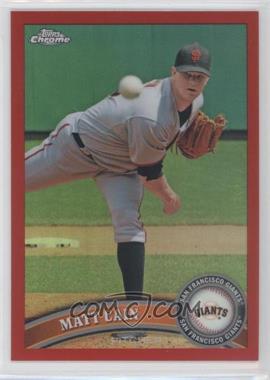
Giants 5, Pirates 0: Now, that’s more like a $100-million man. Matt Cain retired the first 17 batters, gave up a clean single to opposing pitcher James McDonald (an .079 career hitter), then put away the last 10 Pirates, for his third career 1-hitter. He finished with 11 Ks, 1 off his career high, and a personal-best 96 Game Score. Pittsburgh, now hitting .178 with 7 walks, suffered their second shutout this year; they’ve scored 11 runs in 7 games.

Continue reading

Quiz – A Random Mix … or Perhaps Not

We haven’t had a quiz in a while. So, let’s give this one a shot.

No HOFers here. A few all-stars, some jorneymen, and maybe one or two guys you don’t recognize at all.

Some are pitchers, but most aren’t. Several played for the Dodgers, and several had careers spent with LOTS of different teams.

But, since 1919, only these players have accomplished a certain feat. That feat involves two separate events that share a common characteristic.

The players are listed after the break. What is the common link connecting all of them?

The quiz has been solved. Congratulations to Atawerdi96! These are the only players to appear in both a regular season and post-season game on their birthday.

And congratulations also to John Nacca! He got the bonus answer identifying the bolded subset of players as those having both a regular season hit and a post-season hit on their birthday.

Continue reading

Site updates

The blog was down most of the day today thanks to a major outage at the ISP. Oops.

I have installed a new chat widget. It appears in the right sidebar on all pages. Please give it a try so I can see how well it works. I’m sure I’ll be updating options, etc., but I need to see it in action to improve it, so please do use it.

The Imperfect Trifecta or Singles Only, Please

Blogger Paul E pointed out that Jimmy Rollins and Juan Pierre are leading the Phillies attack this year with identical batting averages, on-base percentages and slugging percentages. That unusual trifecta is, of course, usually only accomplished when a player has no walks and no extra-base hits.

Rk Player H BB XBH Year Age Tm G PA AB R 2B 3B HR BA OBP SLG OPS Pos
9 Jimmy Rollins 6 0 0 2012 33 PHI 5 22 21 0 0 0 0 .286 .286 .286 .572 /*6
21 Juan Pierre 3 0 0 2012 34 PHI 4 14 14 0 0 0 0 .214 .214 .214 .428 /*7
Provided by Baseball-Reference.com: View Play Index Tool Used
Generated 4/12/2012.

After the jump, I’ll look a little more into this “phenomenon”.

Continue reading

Roger Clemens, 1996, and the other unluckiest pitching seasons of all-time

In 1996, Roger Clemens had an offseason by his standards, off enough that it may have been the spur to get him on steroids.  It certainly earned him a ticket out of Boston, off to a new team and a career rebirth in Toronto, and at the time, his departure might not have seemed unwarranted. By traditional metrics, 1996 was but a mediocre prelude for Clemens to winning back-to-back Cy Young awards and going 41-13 with a 2.33 ERA over 1997 and 1998. Clemens went 10-13 with a 3.63 ERA for the Red Sox in 1996, walking the most batters of his career with 106. Pushing 35, he looked to be on the decline, a shell of his once-dominant self.

Clemens did lead the American League in strikeouts in 1996 with 257. And in hindsight, we also know that he led the AL in strikeouts per nine innings with 9.5 and finished second in WAR with 7.7. In fact, it’s one of the best  losing seasons for a starting pitcher in baseball history.

Continue reading

Shutdowns: A Replacement for the Save Stat

The folks at Fangraphs have developed, and are advocating the use of, stats that seem to me to represent a major improvement, in evaluation accuracy, over the “save” and the “blown save” as methods for ranking relief pitcher performance.   The Fangraphs concept of the “Shutdown”, as a replacement for the save, is very simple in concept if you  understand the idea of “Win Probability Added” (WPA), which itself has been much discussed over the years at the baseball-reference blog that spun off into High Heat Stats. Continue reading

No Longer on “Speaking” Terms – This Week in Baseball Trade History

SABR Biography Project - http://sabr.org/bioproj/

In a follow-up to my inaugural piece in this vein, I’m looking at trades occurring this week (Apr 9 to 15) in baseball history.

There was one HUGE trade this week. So, let’s look at that one first.
 
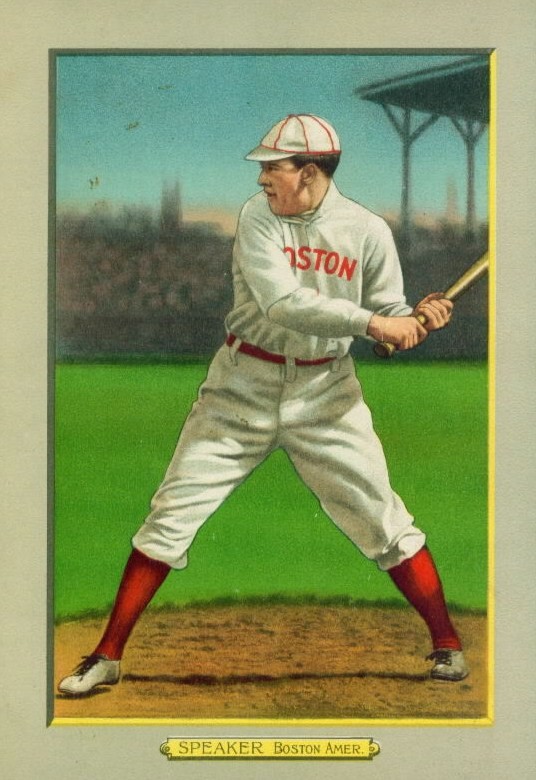
April 12, 1916 – The Cleveland Indians traded Sad Sam Jones, Fred Thomas and $55,000 to the Boston Red Sox for Tris Speaker.
 
Wow! What were the Red Sox thinking? To this point in his career, Speaker was a 166 OPS+ with 56 WAR. In only 7 full seasons. Granted, Speaker’s BA and OBP and SLG had declined every year since his MVP season in 1912. And, his most recent 1915 season, even at 8.1 WAR, was arguably Speaker’s worst since his first full year in 1909 at age 21. But, still. No, this trade was really about something else (I learned a lot of what follows from Speaker’s SABR Bio here).
 

Comparing 2012 offense to 2011 (it’s crashing and burning, folks)

Here’s a quick look at offensive numbers in 2012 vs 2012. Both are through the first 142 games of each season.

(First number is 2011, second number is 2012, all are on a per-game basis):

             2011  2012
Runs scored: 4.56  4.02
HR:          1.06  0.99
2B:          1.65  1.61
BB:          3.20  3.13
K:           7.01  7.42
BA:           .255  .235
SLG:          .406  .385

Ummm…wow. Offense is way down so far this year compared to the same timeframe last year, and last year’s offense continued the overall trend of decline.

If run scoring remains this low for the entire season, it will be the lowest since 1981 (strike-shortened) and 1976 (full-season).

Look  in particular at the strikeouts, which are ridiculously high, up nearly 6% from last year, and last year was a record year for strikeouts!!

UPDATE:

Here are numbers through the first 172 games of each season, 2011 and 2012. All numbers are per game.

      2011  2012   % change in 2012
R     4.55   4.06    -11%
HR    0.98   0.95    -3%
2B    1.75   1.64    -6%
K     6.94   7.51    +8%
BB    3.22   3.14    -2%
BA     .256   .237   -7%
SLG    .404   .383   -5%

These numbers are even more divergent than a couple of days ago!!

Here are some pitching numbers, beyond Ks and BBs as shown above:

            2011     2012      % change in 2012
ERA         4.13     3.66         -11%
IP/start    5.86     5.92         +1%
WHIP        1.334    1.237        -7%

Is Matt Cain the Unluckiest Pitcher Ever?

Of course, the answer to that question is a resounding NO. How unlucky could you be with the contract that Cain just signed? But, contract aside, I want to look at pitcher luck in terms of the results achieved for the quality of work produced. In other words, the relationship between wins and losses, and earned run average.

The traditional benchmark of W-L record for evaluating starting pitchers has now been largely eclipsed by ERA. Case in point is the 2010 AL Cy Young winner, Felix Hernandez, who took the trophy with a 13-12 W-L mark. Nevertheless, W-L is obviously still a prominent statistic. I can again cite Hernandez  as a case in point – there was more than a little criticism of his Cy Young selection, based chiefly on that 13-12 record. Similar reaction attended Cain’s new deal. Even a knowledgeable blogger on this site pointed out Cain’s unremarkable career .486 W-L%, rather than his career 125 ERA+, ninth among active pitchers (min. 1000 IP), and in a tight cluster on that list with such names as CC Sabathia and Justin Verlander.

After the break, I’ll take a look at whether comparison of ERA+ and W-L% can provide clues as to whether a pitcher is lucky or unlucky.

Continue reading